
The year 2018 made a changeover in the startup world. Having passed through the most trying times of the crisis, the industry is now calmly growing, and some dynamics are consolidating, which brings us great hopes of what to expect in the nearest future. We are seeing more successful startups, better-informed investors, and more professional investment overall. In Spain, this progress is partly due to how local policies affect startup growth.
1.3 billion euros in the form of investment. But what we observe on political and institutional fronts are only dark clouds and the benefit of stability in regulatory environments, the necessity to eliminate excessive bureaucracy, and the fact that all the regulatory work is done based on outdated views is not perceived.
Innovativness As a Distinguishing Feature of Start-Ups

Our 2019 targets have been very straightforward, and they involve further expansion in terms of members (we have doubled our numbers almost technically to reach 200 presently), make them more sustainable in the future, and deliver a higher level of service to our members. In this respect, we would like to gather all the regional and local associations in a network to become more influential all over the areas, and we also intend to establish a Startup Observatory.
However, above all what we desire is new regulation; a project and a national plan that the whole political spectrum and our sector agrees on, and with a ten-year perspective to transform Spain into a genuine Startup Country and that inevitably implies drawing up a Startup and Innovation Law that reaches the expectations of our entrepreneurs. Being an association and the voice of startups, we still need to work on the area of education so that the uniqueness of this model could become known in the public sector or in companies and all around the society.
Determinants of Existence and Development of Start-Ups

We take the responsibility of doing it with all humility: without the work by the Association, nobody could carry it out of conversing and negotiating propositions with the parties and governments, stepping in on legislative matters, training the media and the mass opinion about the relevance of startups on our country. We do not understand our modes of operation, our culture, our horizon, and it eventually brings about a regulation mania.
That messes everything around and hampers investments, and then eventually innovations. The Pedro Sanchez Government declared a Startup Law and Entrepreneurial Nation project. The Association was glad about it (among other things because we had demanded it of all political forces) but we never wanted any specificity which has never been. In our opinion, the same Government who preaches about an Entrepreneurial Nation is wrong by taking a stand against innovation in its discussions of the Copyright directive or in having advocated the passing of digital tax.
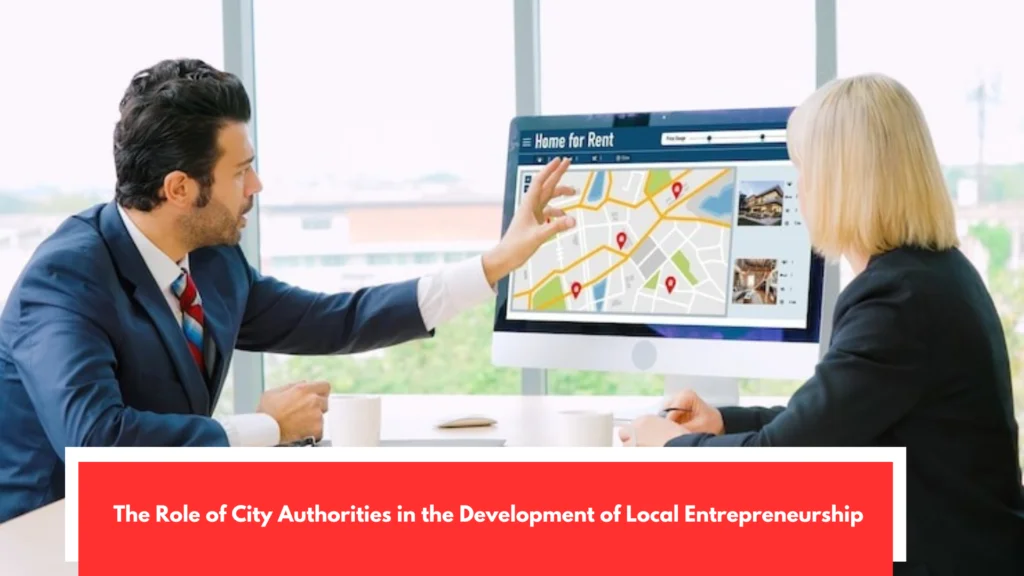
The Role of City Authorities in the Development of Local Entrepreneurship

The idea of an Entrepreneurial Nation does not go well with the notion of digital tax. Nevertheless, we suppose that, the political argumentation aside, there is a parliamentary agreement concerning the ideas which we have defended and worked on with all political forces. This is what we will commit ourselves to do in the next couple of months and this will be when election campaigns are taking place.
To engage in ambitious Startup Country project, under the presidency of the Government, and establish a permanent working group with the sector, to convene and work out concrete measures. The proposals promoted by the Association are quite explicit: recognition of Startups under the law. Otherwise, without the problem, the measures become hard to hammer. We need to be radical and cut down on bureaucracy so much that we can do it and we will use Estonia as example.
Conclusion

Agility is required to start Startups, to liquidate them, to enlist foreign personnel, to be able to get investments at once. Some measures are greatly requested by most of our entrepreneurs, example being doing away with self-employed quota during the first months of life of a startup when it is yet to earn and survive on savings or loans made by relatives. Naturally, we should do better as regards tax treatment of investment in Spain. In the UK, there is the SEIS program, which should be studied so as to incorporate it in the reality of Spain. We should keep our talent and gain new ones.
Spain has favorable climate and quality of live, we really have to make it so easy to have talent attracted and this can be done by a favorable VISA system and a tax system that is not punitive as it is today that workers get to be remunerated through company stocks. On the bottom line, beginning with our advantages and with the awareness of our weaknesses, we all should strive to create a lofty Startup Country project. In that regard we will demand tangible commitments by all of the parties which will take part in the upcoming elections in the coming spring. Government policies have the potential to influence.